
4 Clear Examples of Coercive Control After Breaking Up
Leaving a manipulative partner is a massive victory, but for many survivors, the end of the relationship does not mean the end of the behaviour. You might find yourself second-guessing your reality, wondering if you are overreacting to your ex’s ongoing actions.
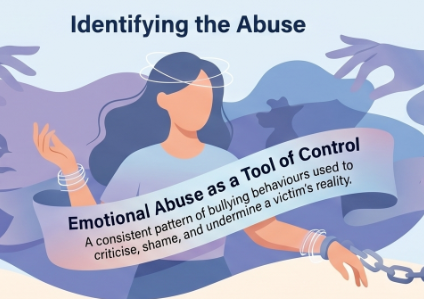
If you feel like you are still walking on eggshells even though you no longer live together, you are likely dealing with examples of coercive control after breaking up. This form of abuse relies on a pattern of domination, intimidation, and isolation designed to keep you trapped in a state of fear and financial or emotional dependence.
What Does Post-Separation Coercive Control Look Like?
When a relationship ends, a controller loses direct access to your daily life. To compensate, they shift their tactics to maintain dominance from a distance.
Here are four common, real-world examples of coercive control after breaking up that help identify this hidden pattern of behaviour.
1. Legal Abuse and Weaponising the Courts
Also known as “abusive litigation,” this happens when an ex uses the legal system as a tool to continue their harassment.
- Filing constant, frivolous motions regarding custody or asset division.
- Making completely false allegations to child protective services or authorities to force you into a defensive position.
- Intentionally dragging out legal proceedings to drain your financial resources and emotional energy.
2. Economic Exploitation and Sabotage
Control is incredibly expensive for the person targeted. Financial abuse frequently intensifies after a separation to prevent you from building a stable, independent life.
- Withholding court-ordered child support or stalling the division of joint assets.
- Interfering with your ability to work by harassing you at your job or damaging your professional reputation.
- Forcing you into massive legal debt while knowing you have fewer financial reserves to fight back.
3. Grandparent, Child, or Third-Party Manipulation
Abusers frequently use other people, including your own children, to spy on you, destabilise your home life, or punish you for leaving.
- Using drop-offs and pick-ups as opportunities to demean you or create high-stress public scenes.
- Enlisting “flying monkeys” friends, family members, or mutual acquaintances, to monitor your social media, track your movements, or pass along subtle threats.
- Interrogating children after visits to gather information about your private life, financial status, or new relationships.
4. Digital Harassment and Surveillance
Modern technology makes it incredibly easy for a controller to invade your peace of mind without ever setting foot near your home.
- Sending a relentless barrage of texts, emails, or calls, often switching rapidly between rage, dynamic charm, and playing the victim.
- Monitoring your physical location through hidden tracking apps, shared digital accounts, or smart home devices you haven’t fully secured yet.
- Demanding immediate responses to non-urgent messages, using the guise of “co-parenting” to justify constant intrusion.
- Stalking Social Media Accounts. Claiming your posts are slander, harassment, insults, and defamation, Then taking 30 pages of screenshots to make false allegations. (Yes, it happened to me.) My Book After The Discard – No Divorce Required, cover that journey. Publishing soon pre-order discount..
Reclaiming Your Reality and Moving Forward
Seeing these behaviours written down can be intensely validating. It proves that you are not crazy, you are not imagining things, and you are not responsible for their choice to cause harm.
A Note on Safety: Trust your instincts completely. If an action feels threatening or designed to destabilise you, treat it as a deliberate tactic of control, not an accidental misunderstanding.
To break the cycle of dominance, focus your energy entirely on what you can control: your boundaries, your healing, and your financial independence.
- Document Everything: Keep a clean, unemotional log of all interactions, text messages, and legal manoeuvres. Stick strictly to the facts (dates, times, and direct quotes).
- Implement Low-Contact Rules: If you must communicate due to legal or parenting ties, use a dedicated co-parenting app or email. Do not engage with insults, emotional baiting, or false accusations. Respond only to objective logistics.
- Build Your Sandbox: Rebuilding your life after massive emotional and economic loss takes immense courage. Focus on securing a stable income, surrounding yourself with people who see and believe your truth, and sharing your story on your own terms.
- Know Your Legal Posistion: There is a free Domestic Abuse App that can assist you in knowing the statutes for your situation. If you are unable to obtain legal advice, due to the many barriers, for example financial, or cross border issues. Try Statute Finder – created by a survivor for other survivors and advocates.
Reclaim Your Power
You have survived the storm of the relationship, and you have the strength to navigate the aftershocks. The truth is your greatest shield, and your independence is your ultimate victory. 2026 is a year for rebuilding, finding your voice, and stepping completely into your freedom.
If this resonated with you, please share this post with someone who might need to hear it today. What strategies have helped you maintain your boundaries? Let’s build a supportive community in the comments below.

This is the prequel to, After The Discard – No Divorce Required.
It a true crime story with no conviction. A vast number of survivors have similiar stories, and unfortunately some individuals are not here to tell their story or make complaints about institutional failures.
The Dream I Was Sold traces a relationship from its love-bombed beginning to the moment an 11-year “manipulationship” ended in four sentences on a Spanish porch of the home that was meant to be their future retirement together.
If you‘re living it (For Survivors) …
This book will help you find the words to name what you have experienced so you can stop carrying the shame.
“Love bombing doesn’t just make you feel chosen—it makes you feel responsible for protecting what you’ve been given. This is not a story about weakness. It is an account of how intelligent, capable women accommodate small silences until their entire world is systematically dismantled”
If You Are Litigating It (For Professionals)…
This book offers an invaluable look inside the psychological mechanics of a victim navigating a system lacking awareness of patterns of control and manipulation.
“For professionals in family law, psychology, and advocacy: this memoir serves as a documented, step-by-step timeline of coercive control. It bridges the gap between what a victim’s nervous system records and what a courtroom fails to recognize”